Have you ever shared a post/story on social media based on the content of that post/story alone?
Have you ever recommended a podcast based on a single episode?
Have you ever felt like you need to pick a side, based on the limited information you have on the subject because your group of friends/peers are discussing a political topic?
Do you think that the people who have done the above, don’t have much of a personality and that could never be you? Have I asked too many questions and are you still reading this?
I hope you are, because I have news for you. It is the human thing to do and it is undeniable.

Death Race
The word “conformity” mostly carries negative connotation. Understandably so, because in a conformist society, people change their behaviour or internal beliefs, so that they can be accepted.
But why does this concept of conformity have mostly negative perceptions? Without conformity, positive and social influence would not be possible. I truly believe every person has conformed to some type of norm or the other. Without it, there would never be “general consensus” on anything. For example, there is a general consensus on drinking and driving being illegal. But then, why do people still do it?
The primary issue lies in understanding whether the change effected in one’s behaviour, to be accepted by others, is a superficial change or a lasting change?
Let’s take the above example of “drinking and driving“. Imagine a boy named Raj (sorry).
Scene 1:
Raj is 20 years old and has driven around Colaba after consuming a few beers but he reached home without any damage. Next day, Raj told his friends that they were stupid to worry because his driving skills are ace and Raj’s friends applaud this behaviour. Raj feels encouraged to do it again.
Scene 2:
Raj goes for an interview and there, he is asked about his opinion on the increase in drunk driving accidents in Mumbai. Raj solely focusses on the bad effects of drinking and driving while answering this question.
In the above interview scene, we can all agree that Raj’s conformity appeared to be superficial in nature because he did not practice what he preached.

Now, let’s alter “Scene 1” and imagine if Raj got into an accident while driving in Colaba after consuming those beers and he was badly injured but he survived. Do you still think that he was disingenuous in his interview? I think we can agree that this could be a scenario of conformity leading to a lasting change in Raj’s behaviour.
What’s different?
Internalisation. The idea of acting or behaving a certain way because it aligns with your belief or value system. Raj’s example was one of a positive internalisation but we all know that conformity also entails negative influence.
In an alternate scene, due to a number of other reasons, Raj could also be a person who interprets the fact that he did not die in the accident, as encouraging, but he would give the same answer in his interview just to comply and get accepted.
The Social Animal
A study lead by Shriram Venkatraman called “Social Media in South India“, explored the use of social media in everyday lives of the people in Tamil Nadu in great depth. One of the conclusions drawn is relevant for this conversation:
Overall even the term ‘social media’ has a different connotation in this Indian case from many of the other studies. In some countries today social media simply means that which extends out from individual and dyadic communication to encompass the ability to deal with a wider group audience. In India, however, ‘social’ is synonymous with society, which is tightly organised by traditional principles such as kinship, age, gender, class and caste.
The study concluded that the expressions on social media was nothing but a reflection of the already established social structure in that society. For example, the expression of dissent/opinion varied on a more “public” platform like Facebook compared to a more “private” platform like WhatsApp, where the subjects could share their thoughts freely with the people they trusted.
However, in my opinion, it could also be said that social media is nothing like physical reality because you constantly get a chance to express/influence/conform with a much bigger audience compared to your physical reality (which may be limited to your friends and family). It is a constant stage of expression that has evolved in a massive way and now it almost always controls the conversations we have offline.
That is why it is arguably more important to be aware of your behaviour on social media and to conform to ideas/opinions only after internalising that thought-process, in a manner that is in alignment with your belief system.
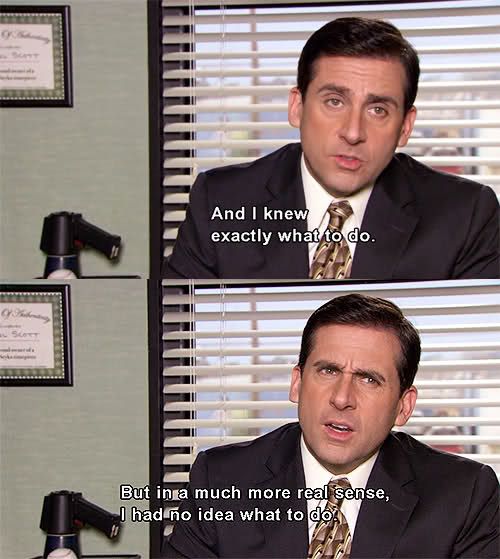
This may require independent reading aside from the information thrown at you. And on the internet, information is constantly being thrown at you.
But we shouldn’t allow ourselves to get overwhelmed by this exposure. It is important and acceptable to limit our exposure to certain things at a time. In a situation, where you constantly involve yourself in controversial political / religious / global news feed, week after week, it is tough not to get overwhelmed.
By the above statement, I do not mean to be ignorant of things and instead, spend more time by infatuating over easy distractions. I simply mean, to distance yourself from all kinds of distractions and focus on what you want to shape your belief systems to be before expressing it blindly.
After all, conformity is a crucial factor that helps to build the law in a country and that is why it’s undeniable. That is what I mean when I say we conform to connect. It is how trends are formed, it is why the market works.
It starts and ends with how we express ourselves.
 Moushmi Mehta
Leave a comment