To answer the above question in a nutshell – the social and political disaster which has been edging since forever and is also known as “2019”. The end of the era brought on an anti-climax worse than the Schindler’s List (an extremely depressing movie based on the Holocaust) and even if you think otherwise, I hope you keep reading.
What happened in India?
- The special status under Article 370 given to Jammu & Kashmir was revoked by the Indian Government and a complete communication shutdown was enforced.
- The Maharashtra Government formation witnessed an unprecedented assembly elections.
- The Citizenship Amendment Act (CAA) now grants Indian citizenship to specified religions (excluding Muslims) who took refuge in India after facing persecution in Bangladesh, Pakistan and Afghanistan.
- The Union Home Minister declared nationwide implementation of the National Register of Citizens (NRC) (already mandated in Assam) which essentially asks every resident to prove their Indian citizenship by furnishing documents. The people who fail to prove their citizenship will be held in detention centres.
- The peaceful protests held in the campus of Jawaharlal Nehru University in Delhi against CAA and NRC, got invaded by a mob which violently attacked students and teachers and vandalized the campus.
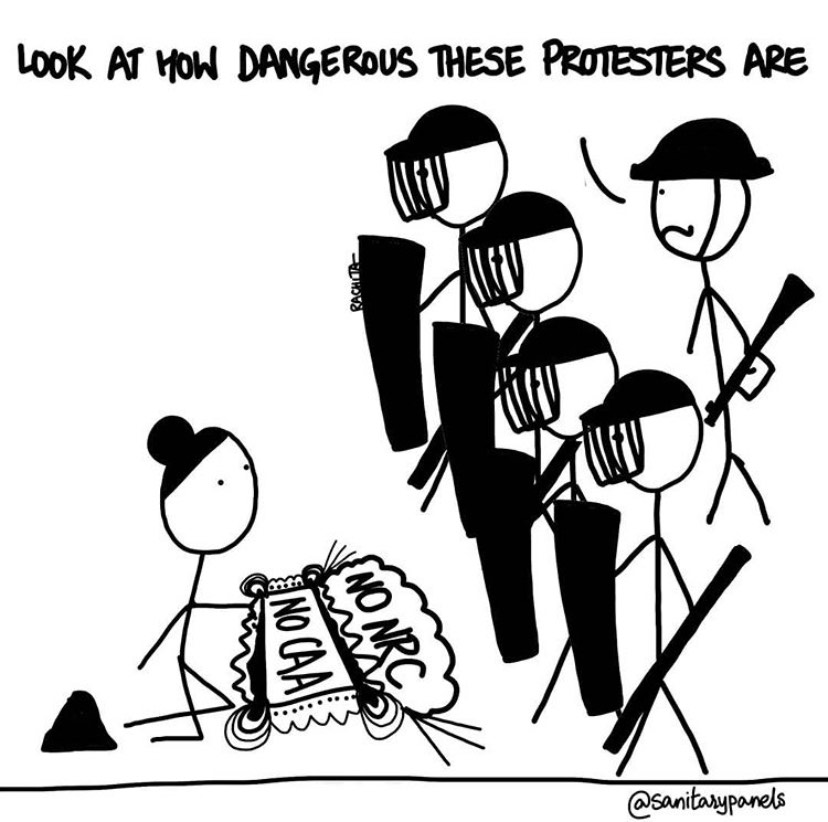
The above is just a gist. The political discourse of the entire world is obviously changing everyday. Witnessing laws that encourage inequality in the garb of economic and national safety, is sort of normalized because “it does not affect me”. But being agnostic to this political climate is also gradually being reprimanded among the privileged/protected classes.
The sense of eternal doom is reflected in any conversation that I have with my colleagues/friends who are now genuinely scared/appalled by the state of things and what it may lead to. But more than often, I’ve come across statements like, “What can we do, I feel helpless but nothing is going to change” or “What’s the point in protesting? It will not change anything and people will eventually stop protesting“.
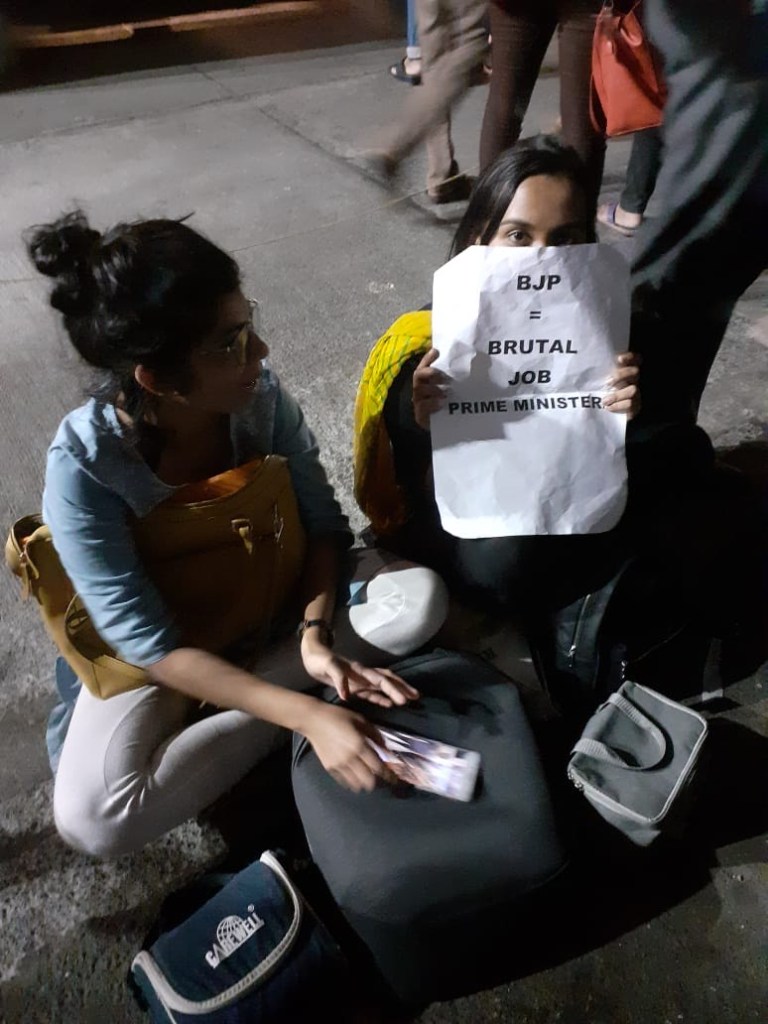
Not going to lie, this hopeless/helpless feeling has been my best friend for life when it came to politics. I kept thinking, even if there are large amount of protests held or even if there maybe a stronger opposition to the Government, would things look different? Isn’t it a dead-end situation and aren’t protesters who are severely harmed by the violence, going to be forgotten tomorrow? Like my father says, “It is all political, all of you are wasting your time.” But then, how do revolutions begin? How do you challenge the Government in power, in a democracy?
In “Inventing the Future: Postcapitalism and a World Without Work” (Verso), a book published in 2015, then updated and reissued, Nick Srnicek and Alex Williams question the power of marches, protests, and other acts of what they call “folk politics.” These methods, they say, are more habit than solution. Protest is too fleeting. It ignores the structural nature of problems in a modern world. I disagree with this because the very intent and reason for holding protests is not to arrive at fast-tracked solutions. The intent is to be heard, have an impact and to exercise our civil right to express dissent, especially in a democracy.

While having a conversation with one of my colleagues about the on-going protests in India, she explained that while most of the people feel that the protests lead to no definite/fast-track solutions and while they may be right, she has another issue. To give an example on a micro level, if you have to deal with sexual harassment at workplace – will you inform a group and storm outside the office until the issue is resolved OR will you storm into the offices of the authorities and demand immediate action? Her issue is with the misdirection and the chaotic state of the protests which are not aiming at the right things. For example, students/teachers being harmed on a daily basis should meet with immediate strict actions and it may become a generic/convoluted issue if it is mixed with the other reasons for protest. She also questioned why the protests are not directed at the opposition parties who are supposed to challenge the Government. Why have we given up hope from them?
I agreed with a lot of things but on a macro level isn’t it different? Yes, issues may become convoluted and protests may rise and die gradually. But to direct the protests in a fixed manner to obtain immediate/correct results is easier said than done. It’s chaotic because the society is left to live in a chaos. The people who participate in the protests may not have full legal knowledge of things (which is something a lot of right-winged people have used as an argument) but they know that human rights have been encroached upon/violated by the authorities and that’s not acceptable. Hence, they choose to speak up. Isn’t that required, isn’t that necessary?

Protests have made history. In a time of sharp political polarization, protest is a way that citizens attempt to communicate their views on key issues. It is partly a response to citizens’ concerns that they are not being represented well by governmental institutions. As a result, it is important to – not only understand the nature of, and messages conveyed by, protests but also understand the sign of the times and participate to be heard.
Today “it does not affect me” but today is short-lived.


 Moushmi Mehta
Leave a reply to sadhanass Cancel reply