All of us have either uttered, received or heard of this ground-breaking advice, at some point in our lives – “Just be your true self”.
As a person, who has severe issues with summarising my entire life in a minute’s introduction of self, I have loathed these words immensely.
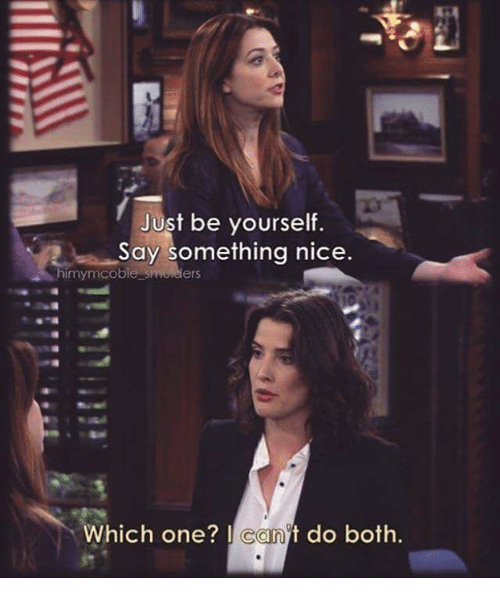
What the hell does it mean to be our true self? We have to behave differently in different social situations.
Our thoughts about things, keep changing every hour of every day. For example, yesterday I really hated myself for watching Gilmore Girls (for the nth time) and today, I enjoyed this guilty pleasure because it truly uplifted my spirits.
But after some research on the concept of self, I realised that I interpreted the words in a wholly microscopic manner. I understood that in order to “just be your true self”, you have to be involved in a constant process and it does not entail arriving at a final destination of your unlimited personality.
Please know that by no means, what I have tried to articulate below, even scratches the surface of this concept.
Becoming Who You Are
I presumed that to know my true self, I had to peel down all my onion layers and find that last hidden layer which represents my ultimate self.
But I am happy to report that there is no such hidden onion layer. How could there be? We are beings that seek knowledge and information in every waking minute. The outside variants keep affecting our inside perceptions.
Our conscious keeps building and rebuilding, day by day, after taking in new experiences and surroundings. Even in our mundane routine lives, every day we feel a little differently.
So how do we become who we are?
Nietzche (a famous dead philosopher), explored the concept of self in great detail and in this part reiterated below, he articulates the concept beautifully:
Let the young soul survey its own life with a view of the following question: “What have you truly loved thus far? What has ever uplifted your soul, what has dominated and delighted it at the same time?” Assemble these revered objects in a row before you and perhaps they will reveal a law by their nature and their order: the fundamental law of your very self. Compare these objects, see how they complement, enlarge, outdo, transfigure one another; how they form a ladder on whose steps you have been climbing up to yourself so far; for your true self does not lie buried deep within you, but rather rises immeasurably high above you, or at least above what you commonly take to be your I.
–Nietzche in an essay titled “Schopenhauer as Educator“.
What I basically took from the above, is that we have to create a concept map of ourselves.
This will help us in fostering meaningful learning by connecting what we already know and any new knowledge we acquire. And it can be as broad or as narrow, as you permit it to be.
Avoid the Hamster Cycle
Another thing that troubled me is – When do we know that we are not being our true self, since it is ever-changing?
Sometimes your inner-negative voice, makes you feel unauthentic in a social situation. Sometimes, you feel like an imposter faking confidence in professional settings.

But the common pattern in all these situations is that – you feel a certain conflict with a version of yourself. Personally, I have attempted to settle this inner conflict by writing down and questioning every thought.
It did not provide much clarity but it did help me in realising that most of the times – I think in assumptions.
At times, I assume that the way I react to certain things is perceived in a certain way. At times, I assume that people pick up on my hesitation and judge what I say to be untrue. I assume so many things that I manage to convince myself that it is the truth.
Bottom line, when you think in assumptions, you possibly end up doubting everything including your own knowledge and self.
So, what do we do to get back on track? Look upto hamsters and know better, I say.
Hamster Facts: Hamsters run on wheels to burn off their excess energy but they can become addicted to it, if there is nothing else to do. Hamsters are moody as hell and with the right enrichment opportunities (i.e. toys), they make healthier choices.
Self-doubt and assumptions can take up so much energy in life that it burns us out. We become like hamsters on wheels, just running in circles.

And that process is natural. But when we incorporate those assumptions into our understanding of reality, we usually stop the process of questioning; we accept it as fact, as something true.
That is when we feel a certain conflict with the version of self because we have assumed ourselves to be a certain way without locating the ladder, which led us to it.
Because we tend to think in assumptions, Nietzsche challenges us to re-think what we understand as truth and as knowledge. According to him, truthfulness – the constant striving and examination of our consciousness – is the highest quality, in discovering self.
Truthfulness can mean that we want to understand who we are, to correct our errors, to avoid deceiving ourselves, to get beyond our comfortable bubbles.
Hence, our drive for truth is in a constant war with our tendency to suppress things and create illusions for ourselves. And that is what they mean, when they say – just be your true self.


 Moushmi Mehta


Leave a reply to yourbadlawyer Cancel reply